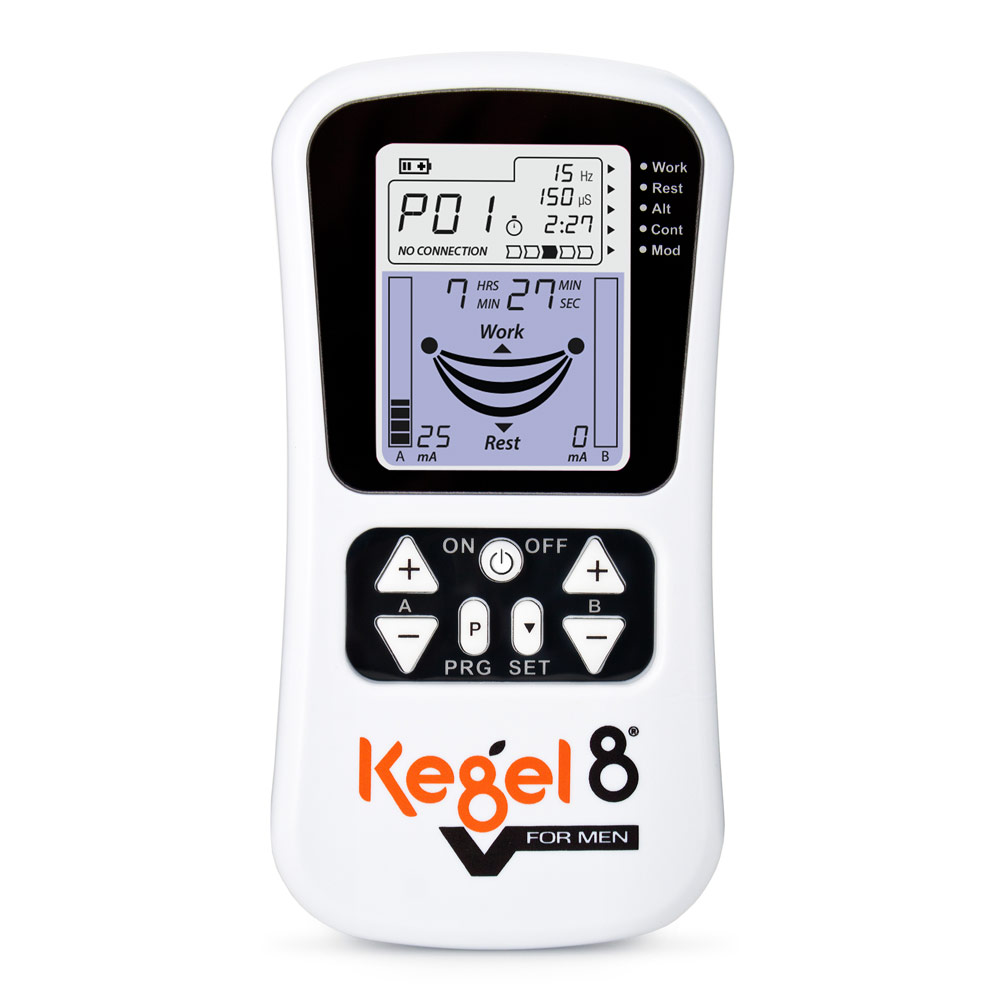
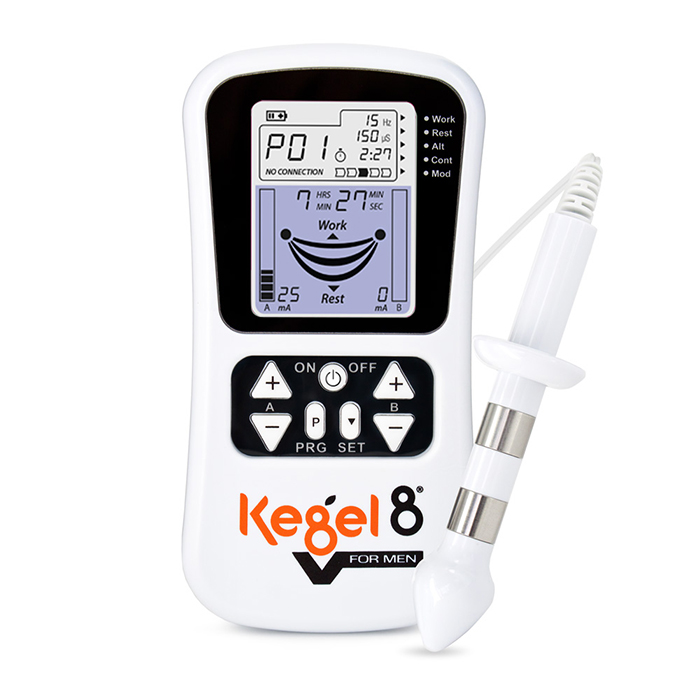



The Kegel8 V For Men is a clinically proven neuromuscular electrical stimulation (NMES) device for male pelvic floor rehabilitation. Trusted by NHS hospitals and private urology clinics, it is now available for effective, discreet use at home.
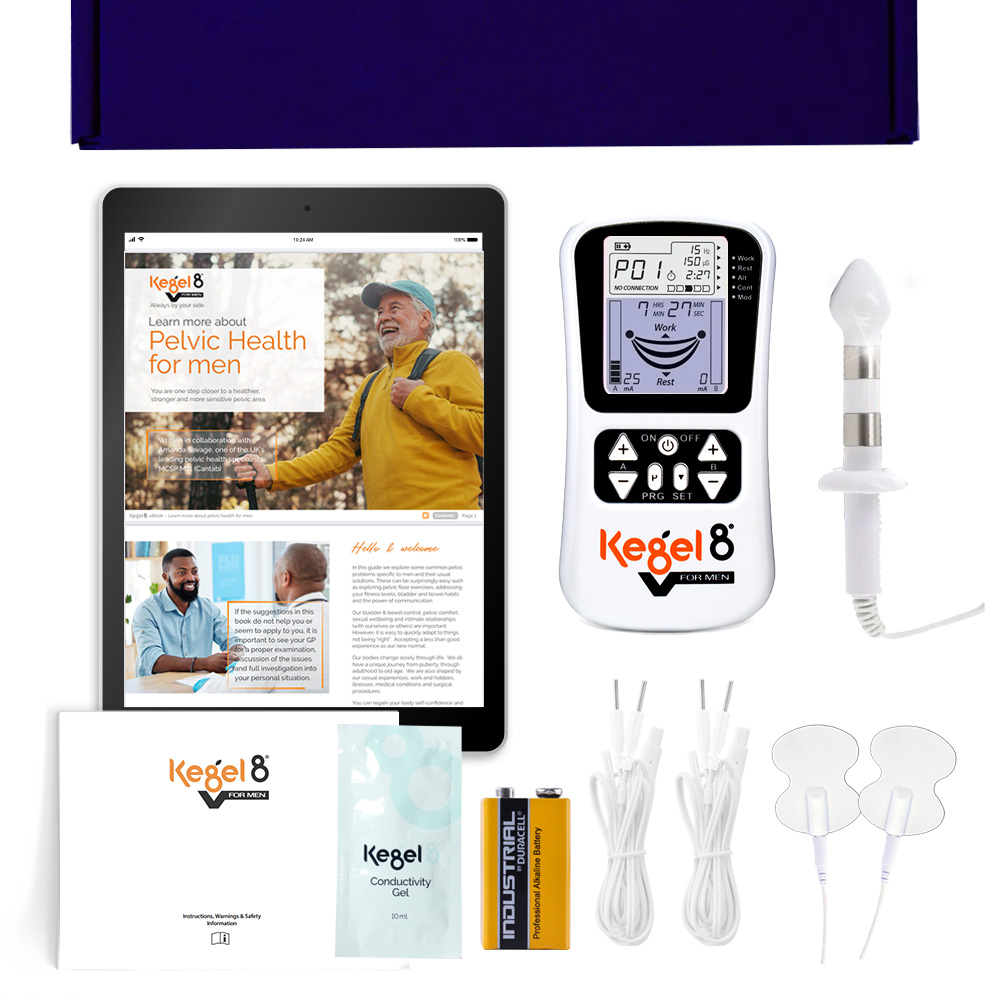
This is precision medical technology — not a wellness gadget. The kit includes both an anal probe and skin electrodes, giving you two clinically distinct treatment pathways in one device. Use whichever suits your needs — or use both.
Two treatment pathways. One device.
The Kegel8 V For Men works in two ways, depending on which accessory you use:
Pathway 1 — Anal Probe (NMES)
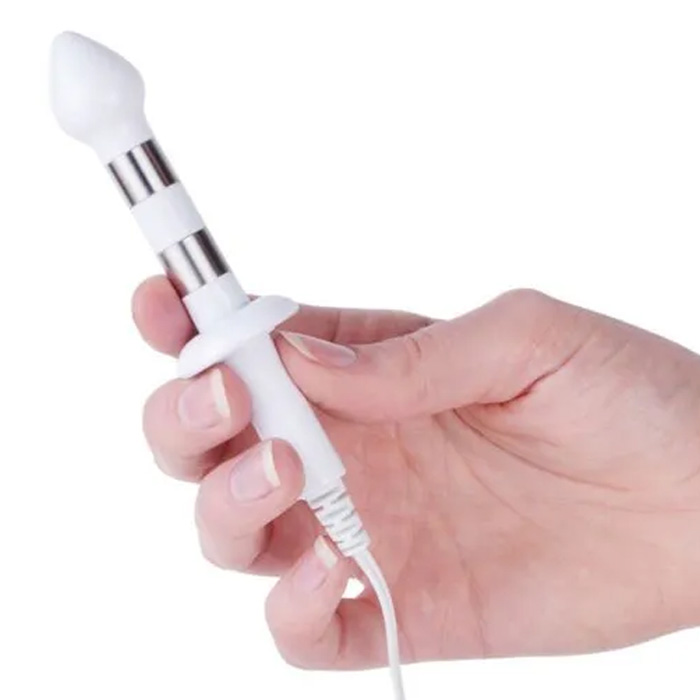
The anal probe delivers direct neuromuscular electrical stimulation to the deep pelvic floor muscles — the same approach used in NHS urology clinics. This is the most effective route for post-prostate surgery rehabilitation, stress incontinence, and pelvic floor strengthening. It is also the pathway supported by clinical evidence for improvements in erectile function and ejaculatory control.
Pathway 2 — Skin Electrodes: Transcutaneous Tibial Nerve Stimulation (TTNS)
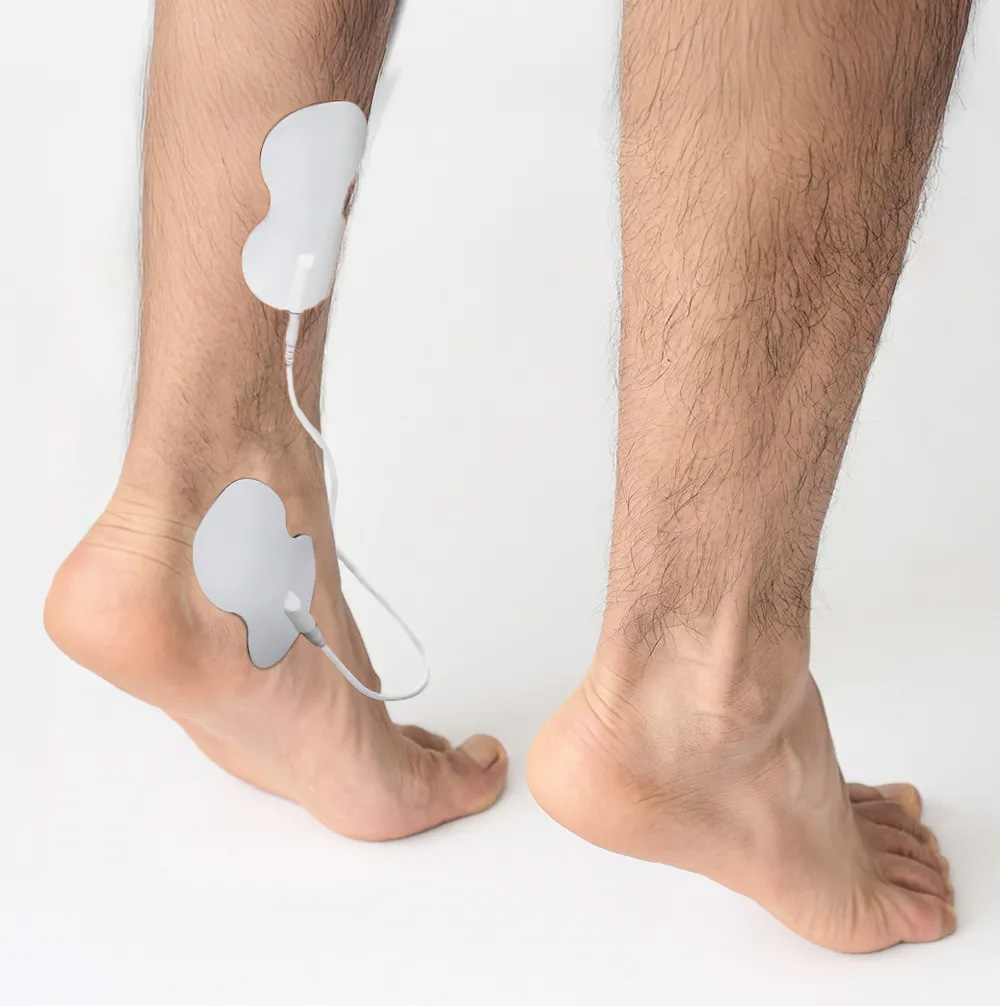
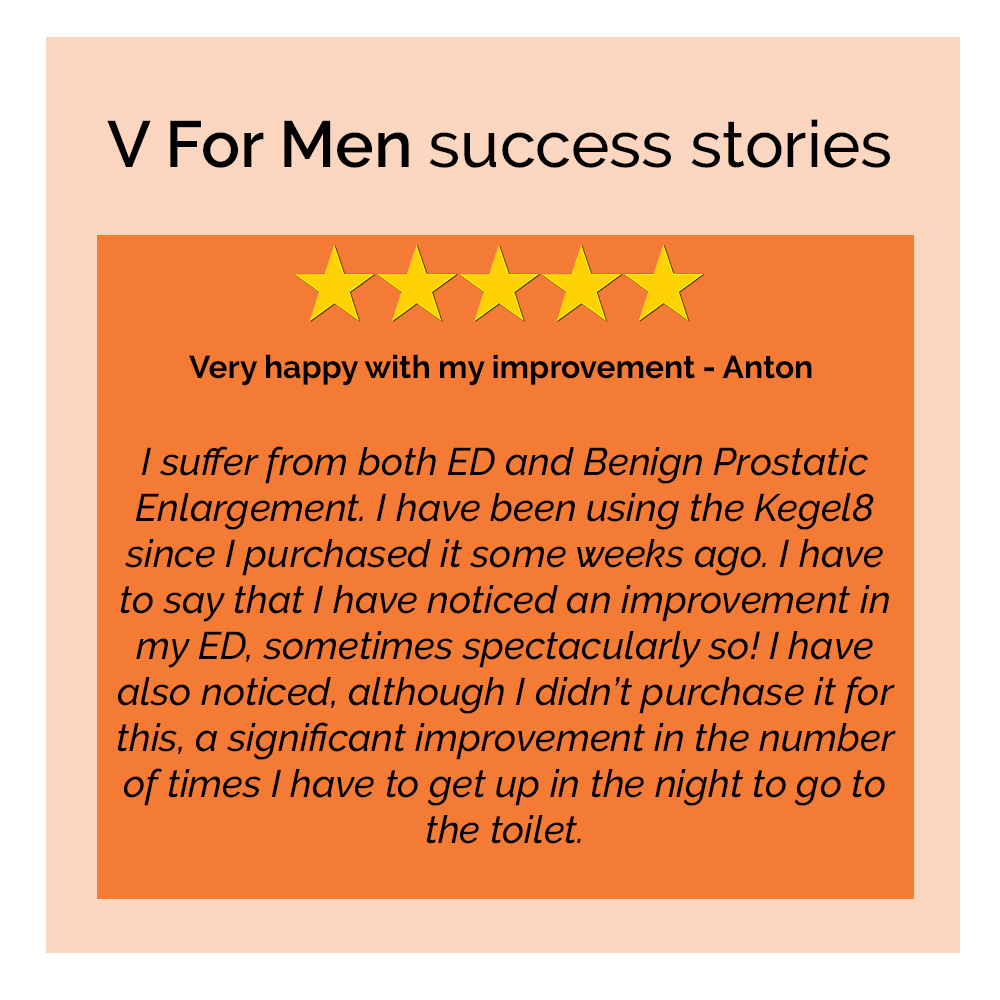
The skin electrodes are placed at the ankle, targeting the posterior tibial nerve — a technique known as Transcutaneous Tibial Nerve Stimulation (TTNS) or Posterior Tibial Nerve Stimulation (PTNS). This is a clinically recognised, non-invasive treatment for overactive bladder (OAB), urinary urgency, frequency, and nocturia (waking at night to urinate).
Rather than directly contracting the pelvic floor muscles, TTNS works by modulating the nerve signals that trigger the overactive bladder reflex. The result is a calmer, less reactive bladder — fewer sudden urges, fewer accidents, and fewer interrupted nights. No internal use required.
For men who are not ready for internal use — or whose primary problem is urgency and nocturia rather than weakness — this is a highly effective, entirely non-invasive starting point.
What the clinical evidence shows
A narrative review published in PubMed Central — Pelvic physical therapy for male sexual disorders — reviewed 26 studies including 14 randomised controlled trials. The findings are significant:
- Pelvic floor rehabilitation including NMES cured or improved erectile dysfunction in up to 75% of men across multiple RCTs. (Van Kampen et al.; Dorey et al. — PMC12700822)
- NMES combined with pelvic floor muscle training cured premature ejaculation in 83% of men in one prospective cohort study. (Pastore et al. — PMC12700822)
- Pelvic physical therapy including electrostimulation is classified as an evidence-based, first-line treatment for male sexual dysfunction. (PMC12700822)
- NMES produces measurable improvements in erectile function, ejaculatory control, and overall sexual satisfaction. (PMC12700822)
These results are achieved without medication, without surgery, and without waiting rooms.
How it works
Via the anal probe, the device delivers targeted electrical impulses to the deep pelvic floor muscles — activating fibres with a precision that voluntary exercise alone cannot replicate. This is particularly important after prostate surgery, where nerve and muscle disruption can be significant and where early, consistent rehabilitation directly determines recovery outcomes.
Via the skin electrodes at the ankle, the device stimulates the posterior tibial nerve, sending signals up the shared nerve pathway to calm and regulate bladder behaviour. This is the same mechanism used in clinical PTNS treatments offered in urology departments.
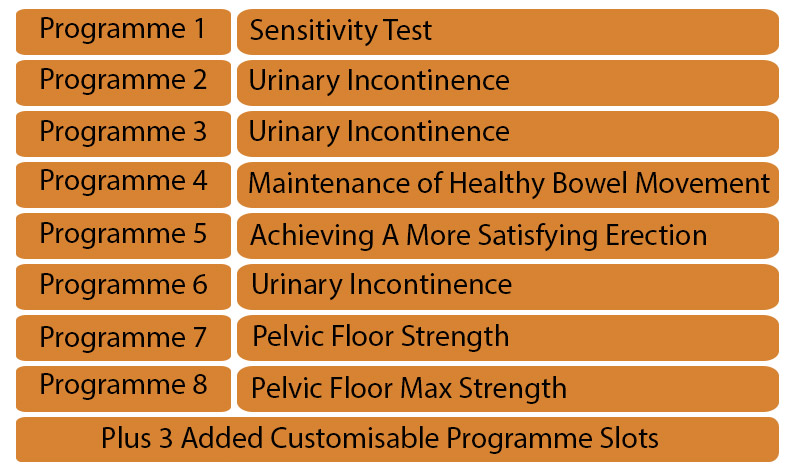
All programmes were developed specifically for men by Amanda Savage, one of the UK's leading pelvic health physiotherapists. Each programme is designed for a defined clinical purpose. There is no guesswork. You follow the programme. The device does the work.
What many men don't know
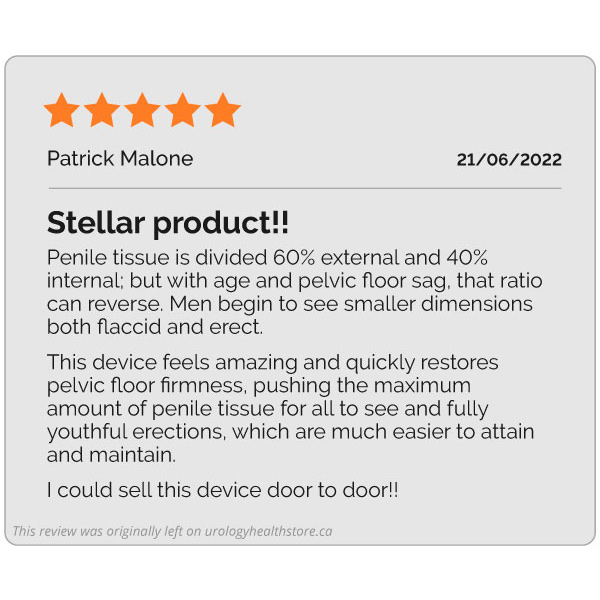
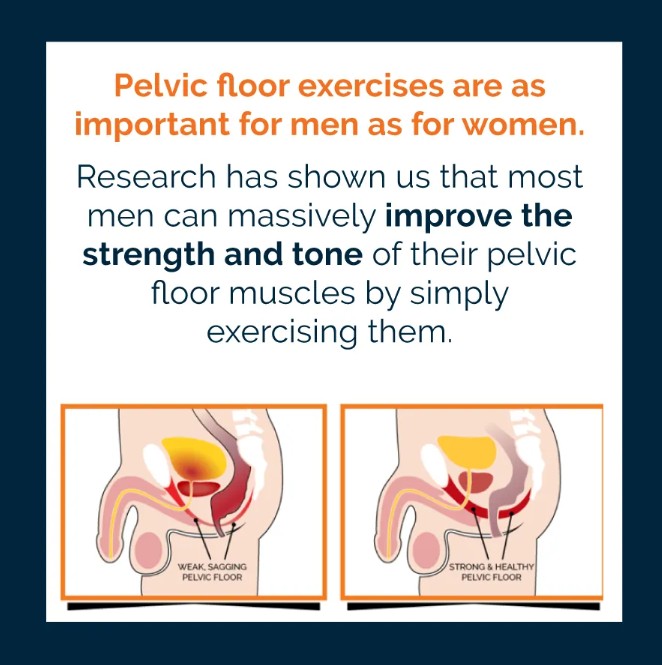
The pelvic floor is directly involved in erectile function, ejaculatory control, and sexual sensation — not just bladder control. Clinical research confirms that pelvic floor muscle dysfunction is a contributing factor in erectile dysfunction and premature ejaculation, and that NMES rehabilitation addresses both.
There is also a counterintuitive finding worth knowing: for some men, the pelvic floor is too tight rather than too weak. Increased muscle tone can impair blood flow to the penis and prevent erection. The Kegel8 V For Men programmes address both strength and relaxation — because optimal pelvic floor function requires both.
What it treats
- Urinary leakage and incontinence following prostate surgery
- Stress and urge urinary incontinence
- Overactive bladder — urgency, frequency, and sudden urges
- Nocturia — waking at night to urinate
- Erectile dysfunction with a pelvic floor component
- Premature ejaculation
- Reduced sexual sensation
- Long-term pelvic floor maintenance and protection
Why electrical stimulation outperforms exercises alone
Most men cannot reliably identify or isolate the correct pelvic floor muscles without guidance. Studies consistently show that without biofeedback or electrical stimulation, men frequently contract the wrong muscle groups — reducing effectiveness and slowing recovery. The Kegel8 V For Men removes that uncertainty entirely. Results are measurable from the outset.
Key features
- Two treatment pathways in one kit — anal probe for deep NMES rehabilitation; skin electrodes for non-invasive tibial nerve stimulation (TTNS)
- Calms an overactive bladder — TTNS via the ankle electrodes reduces urgency, frequency, and nocturia without any internal use
- Medical-grade NMES — the same technology used in NHS hospitals and urology clinics worldwide
- Clinically proven — NMES shown to cure or improve erectile dysfunction in up to 75% of men across multiple RCTs
- Beyond continence — clinical research confirms pelvic floor NMES improves erectile function, ejaculatory control, and sexual satisfaction
- Programmes by Amanda Savage — one of the UK's leading pelvic health physiotherapists; targeted, precise, no guesswork
- Activates the right muscles automatically — more effective than manual exercises alone, especially post-surgery
- Discreet home use — medical-grade results without clinic appointments or waiting lists
Precautions
Not intended for use by individuals with active cancer or those currently receiving cancer treatment. If you are unsure whether this device is suitable for you, please consult your GP or specialist before use.
Clinical reference: Pelvic physical therapy for male sexual disorders: a narrative review. PubMed Central PMC12700822.