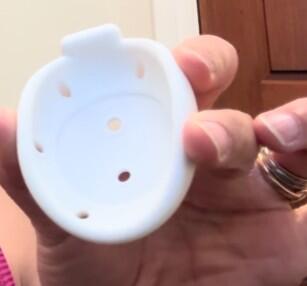
ProFem iDish Incontinence Pessary

The iDish Incontinence Pessary is a medical-grade vaginal pessary expertly designed to help women manage stress urinary incontinence and pelvic organ prolapse symptoms with comfort, confidence and discretion. Whether you’re seeking a non-surgical solution for bladder leaks or supportive relief from second/third degree uterine prolapse, cystocele or rectocele, the iDish is a reliable, clinically proven choice. This pessary can be fitted by yourself or by a professional.
Who is the iDish for?
- Women with stress urinary incontinence
- Those experiencing mild to moderate pelvic organ prolapse
- Women seeking a non-surgical, reversible treatment
- Anyone looking for enhanced urethral support without complex devices
- Not suitable for women during pregnancy
What makes the iDish special?
This pessary is more effective than others on the market because it is specifically designed to manage stress urinary incontinence, not just provide general pelvic support. Its key feature is the integrated support knob, which gently lifts and supports the urethra and bladder neck, helping prevent leaks during everyday activities such as coughing, sneezing, lifting, or exercise.
In addition to improving continence, the dish shape also supports pelvic organ prolapse, including uterine prolapse, cystocele, and rectocele. This dual-action design makes it a practical, non-surgical, and hormone-free solution for women seeking reliable symptom relief, improved comfort, and a more secure fit for everyday wear.
How to use
1- Apply a vaginal lubricant around the pessary if desired to help insertion.
2- Ensure the knob is facing down and the inside dip is facing the front of the pelvis.
3- Squeeze both sides of the pessary to create an oval shape.
4- Push up towards the back of the vagina to reach the cervix and release once the knob is sitting above the pelvic bone.
It is in the correct position once pushed against the cervix and you can place a finger between the pessary and vaginal wall. The knob should sit under the urethra for support, leaving the iDish on an angle. If the knob has twisted to either the left or right, use your finger to direct it to the front to gain contact with the urethra.
Removal- Twist the knob from the front to the left or right, and gently push the pessary to the front of the vaginal wall. Using the knob for support, you can loosen the pessary to slide towards the opening of the vagina. Once fully reachable, squeeze both sides of the pessary to an oval shape like insertion, and slowly pull out of the vagina swith care.
How to clean - Clean regularly using mild soap and warm water, then rinse and dry thoroughly before reinserting.
How often do I need to remove the pessary?
If you are under the care of a healthcare professional and attending regular check-ups, the pessary may be left in place for over 30 days, and in some cases up to 3–6 months, depending on clinical advice.
If you are self-managing, it is recommended to remove and clean the pessary at least every 30 days, although some women choose to remove it more frequently or even daily if comfortable.
How do I select the correct size?
It is recommended that you seek advice from your healthcare provider before using this pessary to ensure the correct size is selected and that you receive guidance on safe and effective use. A healthcare professional can help confirm suitability, demonstrate insertion and removal, and advise on ongoing care to ensure comfort and optimal support.
*Please note* - If the hygiene seal (packaging) is broken/removed, you will not be able to return this item for a replacement or refund.