Incontinence Treatment & Prevention
There are many different treatments available for those suffering from bladder and/or bowel incontinence. Grouped here into conservative therapies, non-surgical medical treatments and surgical treatments.
Working with your GP you can agree a programme of several treatments, to give you a lasting solution. The treatment programme will aim to resolve the issues that are bothering you most first. For example, if you are struggling to get enough sleep as your bladder is waking you up multiple times a night (Nocturia), you may wish to treat that first before concentrating on an issue you may have with leaking when you laugh (giggle incontinence). The programme will aim to improve your quality of life by reducing the impact of your symptoms. Alongside resolving the original cause of the incontinence to reduce the risk of it recurring and repairing any damage that has been done.
If you are suffering with depression, associated with your incontinence, speak to your doctor about what support is available during your treatment.
There are surgical treatments available for incontinence, but they are only offered when other treatments have been unsuccessful, and you are still severely suffering. Pelvic surgeries lose their effectiveness over time; therefore they are usually reserved for adults which are finished having children. Surgeries cannot be considered as a one-time solution to incontinence, and should always be accompanied with permanent lifestyle changes, and pelvic floor exercises, to prevent the incontinence from returning.
As incontinence can be a symptom of another condition, seek formal diagnosis from your doctor before proceeding with treatment. Not all treatments are appropriate for all conditions, and can even result in your incontinence getting worse.
Conservative Therapies to Treat Incontinence
Conservative therapies are often the first step in treating incontinence. They can significantly improve around 25% of mild to moderate bowel incontinence cases—and even more cases of urinary incontinence.
Your GP will usually start by identifying and treating any temporary or reversible causes, often by reviewing your lifestyle and current medications.
-
Lifestyle changes and treatments that can help:
- Maintain a healthy weight
Keeping your BMI at 30 or below can make a big difference. Losing just 8% of your body weight may reduce incontinence episodes by up to 50%. - Limit caffeine and alcohol
These act as diuretics, increasing urine production and potentially worsening symptoms. - Prevent constipation
Straining puts extra pressure on your pelvic floor and bladder. Using a squatting toilet stool can help support a more natural bowel movement and reduce strain. - Stop smoking
Smoking and chronic coughing can weaken the pelvic floor over time. - Adjust your diet
Balance your fibre intake—more for constipation, less for diarrhoea—to support healthy bowel function. - Wear practical clothing
Choose clothes that are easy to remove to avoid delays when you need the toilet urgently. - Plan bathroom visits
Empty your bladder before exercise, sex, or sleep to help reduce leaks. - Targeted pelvic floor (Kegel) exercises
Strengthening the pelvic floor muscles is one of the most effective ways to improve bladder and bowel control. Regular, guided exercises can help prevent leaks and improve muscle tone. - Use of a vaginal pessary (for women)
Devices such as a pessary can provide internal support to the bladder and urethra, helping to reduce stress incontinence during activities like coughing, sneezing, or exercise.
- Maintain a healthy weight
.gif?w=814&h=366&_f=1)
-
Additional Conservative Therapies for Incontinence
- Anal sphincter exercises (for bowel incontinence)
To improve bowel control, you can strengthen your internal and external sphincter muscles. Sit comfortably with your knees slightly apart, then gently squeeze your anus as if trying to stop passing wind. Lift the muscle upwards and hold the contraction without tightening your buttocks, thighs, or abdomen. Breathe normally throughout.
Different routines focus on strength, endurance, and quick response to urgency, with each contraction followed by a full relaxation. These exercises can be done alongside pelvic floor (Kegel) exercises and should be continued long-term. Electrical stimulation (NMES), such as Kegel8’s 12-week programmes for men and women, can also help improve bowel control. - Bowel and bladder behaviour therapy
This is usually a 6-week, partly supervised programme designed to improve how your muscles work during urination and bowel movements. You’ll learn how to correctly contract and relax your pelvic floor, helping reduce urgency and improve emptying.
Biofeedback may be used, involving a small sensor placed in the vagina or anus to monitor muscle activity. This helps guide you to perform the right exercises more effectively and improve bladder and bowel function. - Alarm therapy (for bedwetting)
For those experiencing night-time leaks, a small sensor can be placed in underwear or on a bed pad. It triggers an alarm at the first sign of moisture, helping train your body to respond and wake up before leakage occurs. This method is commonly used for children but can also benefit adults. Continued use is recommended until at least 14 consecutive dry nights are achieved. - Ask for support
If you experience functional incontinence, you may feel the need to go but struggle due to physical or environmental barriers. Making simple changes—such as improving bathroom access, wearing easy-to-remove clothing, or having assistance available—can help.
It may also be useful to create a routine or develop a simple way to communicate when you need help, especially with the support of a partner, family member, or carer.
- Anal sphincter exercises (for bowel incontinence)
Non-Surgical Medical Treatments for Incontinence
If your incontinence is caused by a temporary or underlying issue, your GP may recommend medical treatments alongside lifestyle changes and pelvic floor exercises. These treatments aim to manage symptoms and improve bladder or bowel function:
- Treat underlying conditions
Conditions such as urinary tract infections (UTIs) or constipation can worsen incontinence. Treating these first can often improve symptoms. - Medications for bladder control
- Antimuscarinics (e.g. oxybutynin, tolterodine) help calm an overactive bladder by reducing involuntary contractions.
- Mirabegron relaxes the bladder, allowing it to store more urine and reduce urgency and frequency.
- Duloxetine
Sometimes prescribed for stress urinary incontinence in women, this medication can help improve urethral closure, although it’s not suitable for everyone and is not a first-line treatment. - Desmopressin
May be used short-term for nocturia (frequent urination at night) by reducing urine production overnight. - Bowel management treatments
- Loperamide can help manage diarrhoea by slowing bowel movements.
- Laxatives may be used to relieve constipation and reduce straining.
- Suppositories, enemas, or rectal irrigation may be recommended in more severe cases to help empty the bowel.
- Catheterisation
If you cannot empty your bladder fully, intermittent self-catheterisation may be recommended. In some cases, an indwelling catheter may be used for ongoing management. - Posterior Tibial Nerve Stimulation (PTNS)
This treatment involves mild electrical stimulation near the ankle to help improve communication between the bladder, bowel, and brain. It is typically carried out weekly for several weeks and can help with overactive bladder and some bowel symptoms. - Botox injections
Botulinum toxin can be injected into the bladder muscle to reduce overactivity. Effects are temporary and treatment may need repeating. Some people may need to use a catheter afterwards. - Bulking agents
These are injected into the urethra (or sometimes anal sphincter) to help it stay closed more effectively. Results can vary and may not be permanent.
Surgical Treatments for Incontinence
Incontinence is considered chronic if the original cause of the incontinence cannot be reversed or resolved through conservative therapy's alone i.e. spinal injury. The lasting damage may be treated with a course of medicine. If this is not sufficient, you may be considered as a suitable candidate for surgery.
If you opt for surgery, your doctor will speak to you about the risks, and likelihood for the success of the surgery to fall as time goes on. Surgery is usually reserved for adults that have finished having children as pelvic surgery can cause issues with conception, and falling pregnant can reverse the benefits of previous pelvic surgeries. If you suffer from several different types of incontinence, you may require multiple surgeries. The risk of fatality is present for all surgeries.
Procedures to treat urge incontinence and an overactive bladder include:
- To remove uterine fibroids (in women) - If you suffer with fibroids that are irritating your bladder, there are three popular procedures:
- Myomectomy - Surgical removal of the fibroids from the uterus. Potential complications: inability to conceive.
- Hysterectomy - Surgical removal of the entire womb. Potential complications: unable to have children and increased vulnerability to developing pelvic organ prolapses. Read more about Your Pelvic Floor After Hysterectomy.
- Non-surgical uterine fibroid embolisation (UFE) - Deprives the fibroids of their blood supply so they shrink in size.
- Bladder enlargement (augmentation cystoplasty) - This procedure increases the size of your bladder by adding a piece of intestinal tissue. It also aims to reduce the effects of muscle contractions.
- Potential complications: you may require a permanent catheter following this surgery, and can suffer from recurrent UTI's as a result.
- Sacral nerve stimulation (sacral neuromodulation (SNM)) - You can have a device fitted near your sacral nerves (at the bottom of your back) which is stimulated to tell the muscles of the bladder to relax. Reducing the impact of an overactive bladder caused by detrusor muscle over activity. The device can also be used to increase the strength of the sphincter and pelvic floor muscles, for them to work together more effectively. SNM can be used to resolve pelvic pain, reduce incontinence episodes, treat an overactive bladder, constipation and many other pelvic conditions. It influences the muscles, nerve endings and reflexes in the pelvis.
- Potential complications: no long term negative effects have been reported, however, you may suffer temporary discomfort or infection.
- Urinary diversion - If your bladder or urethra is blocked or severely damaged, a urinary diversion redirects the urine straight from the kidney into either; an artificial pouch inside the body (continent diversion); or a plastic pouch worn outside the body (urostomy). It can be done temporarily whilst a blockage is resolved, or permanently.
- Potential complications: this is a major surgery and can lead to bladder infections and needing further surgery.
Procedures to treat stress incontinence include:
- Tension-free Vaginal Tape (TVT) procedure - A tape procedure reduces the pressure on the bladder. It involves a piece of plastic tape being permanently inserted behind the urethra to support it. 2/3 women experience normal bladder function after the surgery.
- Potential complications: some women develop urge incontinence following the surgery; increasing how often they need to go to the bathroom, and cannot always empty their bladder when they do go. Artificial mesh and tape can erode into the surrounding tissue, causing lasting pain. From 2017, the National Institute for Health and Care Excellence recommend that artificial mesh and tape is only used in pelvic surgeries within the context of research - whilst further evidence into its long-term safety is carried out.
- Sling procedure - A sling (made of your or a donors tissue, or a synthetic material) is placed around the neck of your bladder to support it and prevent accidental leaks.
- Potential complications: some individuals develop overflow incontinence. From 2017, the National Institute for Health and Care Excellence raise serious concerns about using synthetic mesh in such procedures. Serious complications are possible, which include lasting pain and the surgery failing. If the mesh needs to be removed, as it begins to erode into your tissue, it can be difficult and occasionally impossible to do so.
- Colposuspension - This surgery lifts the neck of your bladder to prevent involuntary leaks in women suffering from stress incontinence.
- Potential complications: issues with this surgery include developing overflow incontinence, sexual discomfort and frequent urinary tract infections.
- Artificial urinary sphincter - When you are holding in urine, you are unconsciously contracting your urinary sphincter. An artificial urinary sphincter can replace yours, and can be activated and deactivated as needed, depending on the type of item fitted. This procedure is mostly used for men suffering from stress incontinence.
- Potential complications: it is not uncommon for the artificial sphincter to fail and need to be removed after many years of use.
Procedures to treat bowel incontinence include:
- Artificial anal sphincter - If the muscles of the sphincter are irreparably damaged, an artificial circular cuff is placed under the skin around the anus. This keeps the anus closed until a button under the skin is pressed, at which point the cuff opens and stool can be passed. The cuff then slowly refills with fluid, closing it again.
- Potential complications: 86% of patients suffer from complications. These range from infection and pain, to erosion of the cuff and increased faecal incontinence and constipation.
- Sphincteroplasty - To give extra support and strength to the anal sphincter, some of the tissue in the muscle is removed, and then the muscles are overlapped.
- Potential complications: infection, no improvement in the incontinence and leaks around the surgical stitches.
- Endoscopic heat therapy - A new treatment for bowel incontinence, heat is applied to the anal sphincter through a thin probe. It encourages tissue scarring to tighten the muscles.
- Potential complications: the most common issue is anal ulcers forming, leading to anal pain. Other reported risks include increased constipation, diarrhoea and severe bleeding.
- Colostomy - If other treatments have been unsuccessful, the colon (lower bowel) is shortened and given an artificial opening which leads to an external colostomy bag, which then collects the stool.
- Potential complications: the development of granulomas (a mass of cells caused by inflammation), infection, pain, leaks and skin conditions around the opening.
- Sacral nerve stimulation (sacral neuromodulation (SNM)) - You can have a device fitted near your sacral nerves (at the bottom of your back) which is stimulated to increase the strength of the sphincter and pelvic floor muscles, for them to work together more effectively. SNM can be used to resolve pelvic pain, reduce incontinence episodes, treat an overactive bladder, constipation and many other pelvic conditions. It influences the muscles, nerve endings and reflexes in the pelvis.
- Potential complications: no long term negative effects have been reported. You may suffer from temporary discomfort or infection.
- Implanted magnetic bead band - If you have weak or damaged sphincters, you may be offered this relatively new procedure. A tunnel is made around the anus, into which a ring of magnetic beads is placed. The magnets keep the sphincter closed, until stool presses against it to interfere and open the ring. The National Institute for Health and Care Excellence recommend this procedure due to the significant improvement in quality of life that it can provide.
- Potential complications: more research into the procedures effectiveness and safety needs to be done. Current known risks include temporary infection, swelling, pain and bleeding. Long term risks include difficulty passing stool, developing abscesses and the band breaking.
- Muscle transposition - A segment of the gracilis muscle, from the patients thigh, is added to the anus as extra bulk. An electric pulse generator is implanted into the abdomen which continuously stimulates the muscle, turning it into a slow twitch endurance muscle.
- Potential complications: infection, electrical/technical problems and issues emptying your bowel.
Other treatments to resolve incontinence are being studied all the time to ensure they are safe and effective. Visit the National Institute for Health and Care Excellence for advice into procedures you are offered which are not mentioned above.

Prevention
There are many things which can make you vulnerable to developing incontinence. It usually develops gradually, as a result of multiple factors such as weight, smoking, and chronic constipation. You can reduce the impact of these on the function of your bladder and bowel by changing your lifestyle to cut the risk out.
Some events cause incontinence suddenly or are unavoidable. These include: suffering a spinal injury, ageing, giving birth, having a genetic predisposition or disease which leaves you vulnerable. Although you cannot avoid these causes, you can become more resilient to the impact of these events, and be in a better position to recover (where possible).
Its important to recognise the early warning signs of incontinence developing. So you can protect yourself and those you care for, and seek treatment as soon as possible. It is important that you do not avoid formal diagnosis for fear of embarrassment or denial. Most cases of incontinence can be treated with conservative therapy's, and you can be back to full health within a few months.
Reducing Your Risk of Developing Incontinence
The following recommendations can be followed by anybody:
- Exercise your pelvic floor (Kegel exercises) - Keeping your pelvic floor muscles strong is essential for normal bladder and bowel function. This is especially important before pregnancy and other occasions where you are aware that your pelvic floor muscles will be weakened. If you keep your pelvic floor at its highest strength, like any muscle, it will recover from stress and injury much faster.
- Biofeedback therapy can be introduced into your exercise routine to ensure you are completing your manual exercises correctly. Usually using a vaginal or anal probe, an electronic biofeedback machine can give you a reading for how effective your 'squeezes' are being.
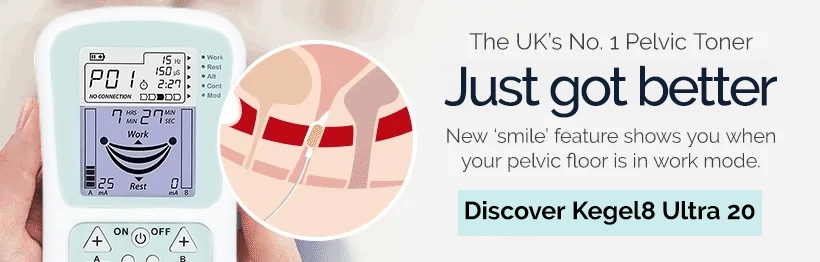
- You can enhance the effectiveness of your pelvic floor exercises by using an automatic electronic pelvic toner. Toners use electrical stimulation to contract and relax your muscles in the most effective way. Using a NMES Pelvic toner is the quickest and most effective way to see an improvement in the strength of your pelvic floor muscles.
- Maintain a healthy weight - Keeping your BMI under 30 stops any unnecessary pressure from being put on your pelvic floor, which would otherwise weaken it.
- Keep fit - Exercise is an essential part of any healthy lifestyle. It keeps your muscles strong and your heart healthy. Pick low impact exercises over high impact exercises to still get a great workout without risking damage to your pelvic floor.
- Avoid or cut down diuretics - Avoid diuretics such as alcohol and caffeine which increase urine production. Reduce your intake throughout the day and stop a few hours before you go to bed.
- Avoid decongestants - Recent studies suggest that drugs, such as Pseudoephedrine, which are used in over the counter decongestants, can tighten the urinary sphincter and cause urinary retention and overflow incontinence.
- Attend prostate screening (for men) - A common cause of bladder and bowel dysfunction is prostatic enlargement or benign prostatic hyperplasia (BPH) causing an obstruction. Having this condition caught early can mean you avoid suffering from incontinence. Try a Prostate Home Test kit.
- Attend smear tests (for women) - You may consider them invasive, but having a professional check the health of your vagina can ensure pelvic issues are caught early.
- Only urinate when you need to - Many people suffer from an overactive bladder as they have inadvertently trained their bladder to have the urge to urinate when it is not full. If you usually go even when you don't have an urge, hold off as long as you can without leaking..
- Treat urinary tract infections, constipation and diarrhoea - These conditions can lead to incontinence as they irritate the bladder and bowel and make it easier for leaks to occur.
- Stop smoking - If you regularly smoke you may develop a chronic cough which weakens your pelvic floor as it is frequently put under stress.
- Treat any chronic coughs - Manage asthma, hay fever and any other conditions you may have that lead to a chronic cough.
- Manage your diabetes - Studies suggest you are at twice the risk of developing urinary incontinence if you suffer from type 2 diabetes. Although not yet fully understood, it is thought that the normal functions for you to be continent are impaired by the complications of diabetes. If you are overweight, as well as suffering from type 2 diabetes, you are even more likely to experience incontinence.
- Speak to a professional - If you have experienced sexual abuse which is making it hard to comfortably use the bathroom, or if you are suffering from depression, speak to a professional.
Early Warning Signs of Incontinence
There are many things you may experience before you are diagnosed with incontinence. We have listed a few of these below. Always speak to your GP if you have any concerns, as some of these warning signs are also symptoms of other conditions.
You may be developing incontinence if you:
- occasionally leak urine and/or faeces
- often stain your underwear
- are visiting the toilet more frequently
- often pass wind uncontrollably
- often get up during the night to urinate
- have recurring urinary tract infections (UTI's)
- frequently suffer from diarrhoea or constipation
Please note: this does not list all the precursors of incontinence, however a 12 week exercise programme with Kegel8 Ultra 20 will have clinically proven results.

Sources
Al-Shaikh, G. Syed, S. Osman, S. Bogis, A. Al-Badr, A. (2018). International Journal of Women's Health. Pessary use in stress urinary incontinence: a review of advantages, complications, patient satisfaction, and quality of life. [online] 10(1), p195-201. [viewed 13/11/24]. Available from: https://www.dovepress.com/pessary-use-in-stress-urinary-incontinence-a-review-of-advantages-comp-peer-reviewed-fulltext-article-IJWH
Bladder and Bowel Support Company (2014). Factsheet: Faecal Incontinence. [online] Bladder and Bowel Community. [viewed 13/11/24]. Available from: https://www.bladderandbowel.org/wp-content/uploads/2017/05/BBC017_Faecal-Incontinence.pdf
Carter, D. (2014). Gastroenterology. Conservative treatment for anal incontinence. [online] 2(2), p85-91. [viewed 13/11/24]. Available from: https://pmc.ncbi.nlm.nih.gov/articles/PMC4020129/
Chughtai, B. Laor, L. Dunphy, C. Lee, R. Te, A. Kaplan, S. (2015). Reviews in Urology. Diagnosis, Evaluation, and Treatment of Mixed Urinary Incontinence in Women. [online] 17(2), p78-83 [viewed 13/11/24] Available from: https://pmc.ncbi.nlm.nih.gov/articles/PMC4857898/
Dwyer, N. T. (2006). Urology Board Review Manual. Stress Urinary Incontinence in Women. 13(1), p 1-12.
Heymen, S. Scarlett, Y. Jones, K. Ringel, Y. Drossman, D. Whitehead, W. E. (2009). Diseases of the colon and rectum. Randomized Controlled Trial Shows Biofeedback to be Superior to Alternative Treatments for Patients with Pelvic Floor Dyssynergia-type Constipation. [online] 52(10), doi: 10.1007/DCR.0b013e3181b55455. [viewed 13/11/24]. Available from: https://pmc.ncbi.nlm.nih.gov/articles/PMC3855426/
NHS Trust. (2023). Urinary incontinence: Non-surgical treatment. [online] NHS Trust, 2023. [viewed 13/11/24] Available from: https://www.nhs.uk/conditions/urinary-incontinence/treatment/
Kegel, A. H. (1952). Ciba Clinical Symposia. Stress incontinence and genital relaxation; a nonsurgical method of increasing the tone of sphincters and their supporting structures. [online] 4(2), p 35-51 [viewed 13/11/24] Available from: https://pubmed.ncbi.nlm.nih.gov/14905555/
Khandelwal, C. Kistler, C. (2013). American Family Physician. Diagnosis of Urinary Incontinence. [online] 87(8), p543-550. [viewed 13/11/24] Available from: https://www.aafp.org/pubs/afp/issues/2013/0415/p543.html
Maternik, M. Krzeminska, K. Zurowska, A. (2015). Pediatric Nephrology (Berlin, Germany). The management of childhood urinary incontinence. [online] 30(1), p41-50. [viewed 13/11/24]. Available from: https://pmc.ncbi.nlm.nih.gov/articles/PMC4240910/#!po=59.3750
Mid Cheshire Hospitals NHS Foundation Trust. (2024). Sphincter exercises for people with bowel control problems. [online] The Association of Coloproctology of Great Britain and Ireland, 2024. [viewed 13/11/24]. Available from: https://www.colorectalassociates.com/blog/anal-incontinence-treatments
NHS Trust. (2023). Urinary incontinence: Overview. [online] NHS Trust, 2023 [viewed 13/11/24] Available from: https://www.nhs.uk/conditions/urinary-incontinence/
NHS Trust. (2023). Urinary incontinence: Surgery and procedures. [online] NHS Trust, 2023. [viewed 13/11/24] Available from: https://www.nhs.uk/conditions/urinary-incontinence/surgery/
NICE. (2004a). Sacral nerve stimulation for urge incontinence and urgency-frequency. [online] National Institute for Health and Care Excellence, 2004. [viewed 13/11/24] Available from: https://www.nice.org.uk/guidance/ipg64
NICE. (2004b). Sacral nerve stimulation for faecal incontinence. [online] National Institute for Health and Care Excellence, 2004. [viewed 13/11/24] Available from: https://www.nice.org.uk/guidance/ipg99
NICE. (2004c). Artificial anal sphincter implantation. [online] National Institute for Health and Care Excellence, 2004. [[viewed 13/11/24]Available from: https://www.nice.org.uk/guidance/ipg66
NICE. (2005). Intramural urethral bulking procedures for stress urinary incontinence is women. [online] National Institute for Health and Care Excellence, 2005. [viewed 13/11/24] Available from: https://www.nice.org.uk/guidance/ipg138
NICE. (2006a). Percutaneous endoscopic colostomy. [online] National Institute for Health and Care Excellence, 2006. [viewed 13/11/24]Available from: https://www.nice.org.uk/guidance/ipg161
NICE. (2006b). Stimulated graciloplasty for faecal incontinence. [online] National Institute for Health and Care Excellence, 2006. [viewed 13/11/24] Available from: https://www.nice.org.uk/guidance/ipg159
NICE. (2010). Treating an overactive bladder by stimulating a nerve near the ankle. [online] National Institute for Health and Care Excellence, 2010. [viewed 13/11/24]Available from: https://www.nice.org.uk/guidance/ipg362
NICE. (2018). Faecal incontinence in adults: management National Institute for Health and Care Excellence, 2018. [viewed 13/11/24] Available from: https://www.nice.org.uk/guidance/cg49
NICE. (2019). Urinary incontinence in women: management. [online] National Institute for Health and Care Excellence, 2019. [viewed 13/11/24] Available from: https://www.nice.org.uk/guidance/ng123
NICE. (2023). Inserting a magnetic bead band for faecal incontinence. [online] National Institute for Health and Care Excellence, 2023. [viewed 13/11/24]Available from: https://www.nice.org.uk/guidance/ipg483
NICE. (June 2019). Urinary incontinence in women: management, 1 Recommendations [online] National Institute for Health and Care Excellence, 2019 [[viewed 13/11/24]. Available from: https://www.nice.org.uk/guidance/ng123
NICE. (2017a). Single-incision short sling mesh insertion for stress urinary incontinence in women. [online] National Institute for Health and Care Excellence, 2017. [viewed 13/11/24] Available from: https://www.nice.org.uk/guidance/ipg566/ifp/chapter/What-has-NICE-said
NICE. (2024). Find guidance. [online] National Institute for Health and Care Excellence, 2024. [viewed 13/11/24] Available from: https://www.nice.org.uk/guidance/ipg566
Olson, C. H. (2014). Clinics in Colon and Rectal Surgery. Diagnostic Testing for Fecal Incontinence. [online] 27(3), p85-90. [viewed 13/11/24]. Available from: https://pmc.ncbi.nlm.nih.gov/articles/PMC4174193/
Price, N. Dawood, R. Jackson, S. R. (2010). Maturitas. Pelvic floor exercise for urinary incontinence: A systematic literature review. [online] 67(4), p309-315. [viewed 13/11/24]. Available from: https://www.semanticscholar.org/paper/elvic-floor-exercise-for-urinary-incontinence-%3A-A-Price-Dawood/189c3b354e250e621df819c4dc96ddece0f835ac?p2df
Rahule, A. Sagdeo, V. Soni, N. (2015). Journal of Contemporary Medicine and Dentistry. Evaluation of Effect of Kegel Exercise for the Management of Stress Incontinence in Women of Gujrat, India.[online] 2(3), p 20-23. [viewed 13/11/24] Available from: https://www.semanticscholar.org/paper/Evaluation-of-Effect-of-Kegel-Exercise-for-the-of-%2C-Soni-Rahule/20e26c8d8375900d97ab45d416870746afc85307?p2df
Kapoor, D. S. (2005). International Urogynecology Journal. Review article: Combined urinary and faecal incontinence. [online] 16, p 321-328. [viewed 13/11/2024]. Available from: https://link.springer.com/article/10.1007/s00192-004-1283-0
Mantle, J. Haslam, J. Barton, S. (2004). Second Edition. Physiotherapy in Obstetrics and Gynaecology. [book] Butterworth Heinemann, London, 2004. [viewed 13/11/2024]
NHS Trust. (June 2023). Urinary incontinence: Overview. [online] NHS Trust, 2023. [viewed 13/11/2024] Available from: https://www.nhs.uk/conditions/urinary-incontinence/
Phelan, S. Grodstein, F. Brown, J. S. (2009). The Journal of Urology. Clinical Research in Diabetes and Urinary Incontinence: What We Know and Need to Know. [online] 182(6 Suppl), p S14-S17. [viewed 13/11/2024] Available from: https://pmc.ncbi.nlm.nih.gov/articles/PMC2848400/
Selius, B. A. Subedi, R. (2008). American Family Physician. Urinary Retention in Adults: Diagnosis and Initial Management. [online] 77(5), p643-650. [viewed 13/11/2024] Available from: https://www.aafp.org/pubs/afp/issues/2008/0301/p643.pdf
Shao, I-H. Wu, C-C. Tseng, H-J. Lee, T-J. Lin, Y-H. Tam, Y-Y. (2016). Drug Design, Development and Therapy. Voiding dysfunction in patients with nasal congestion treated with pseudoephedrine: a prospective study. [online]10, p2333-2339. [viewed 13/11/2024] Available from: https://pmc.ncbi.nlm.nih.gov/articles/PMC4958351/#!po=78.5714